
Leaf spring guides
Truck sagging on one side?
A truck that leans, squats under load, or hits the bump stops is telling you the springs are done. Here is how to confirm it, and what actually fixes it.
Diagnosis
Check it in five minutes
Park on level ground and measure. No tools beyond a tape.
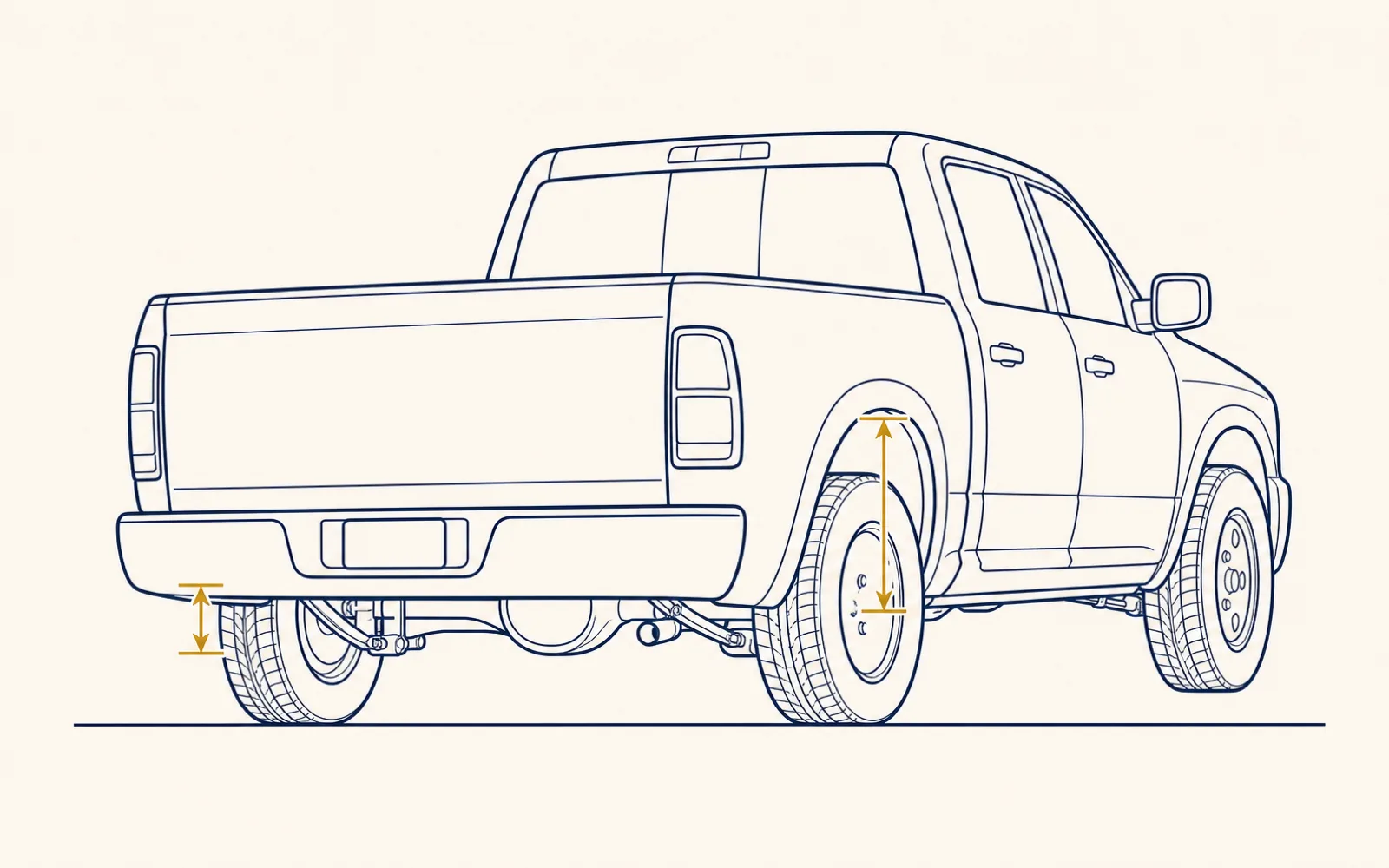
- Measure both sides. Hub center to fender lip, left and right, same axle. A difference of an inch or more points at the springs.
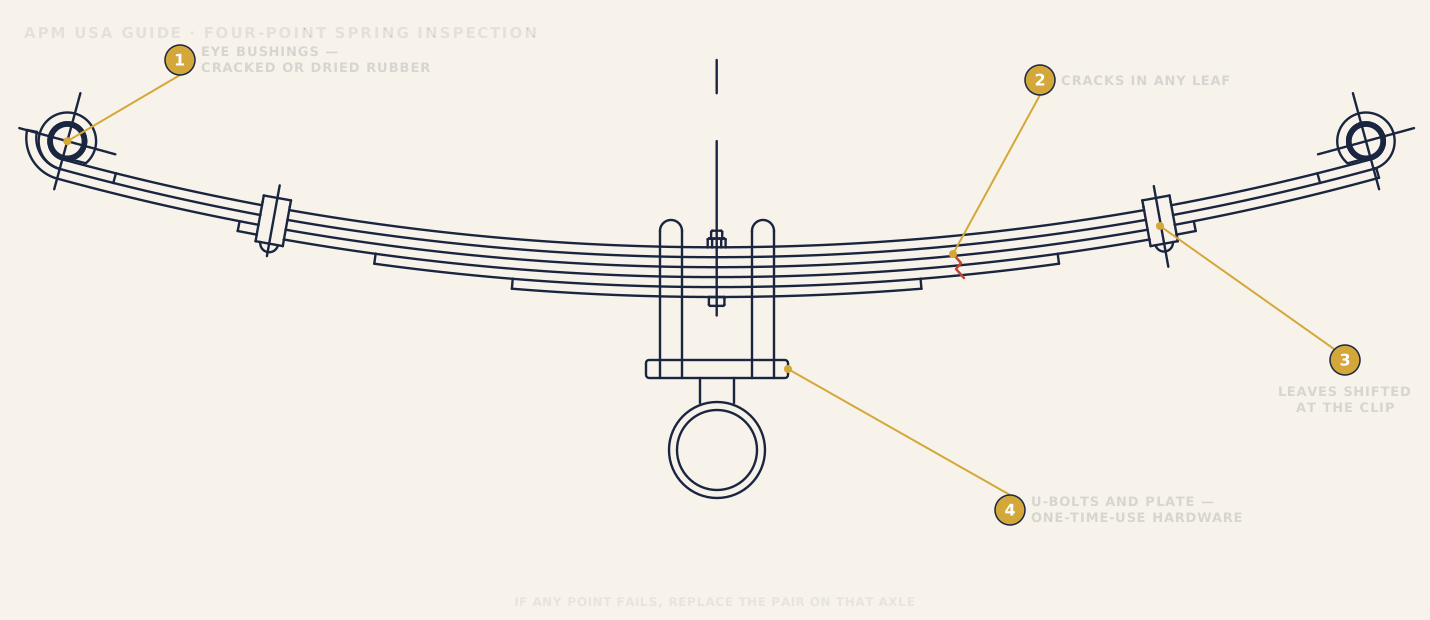
- Look at the arch. A healthy spring holds a visible curve. Flat leaves, or leaves curving the wrong way, mean the steel is fatigued.
- Inspect each leaf. Cracks, a snapped leaf end, or leaves that have shifted sideways are replace-now findings, not watch-it findings.
- Check the bushings and hardware. Dried, cracked, or missing bushings in the spring eyes let the whole pack sit wrong. U-bolts are one-time-use hardware, so plan on new ones with any spring job.
Why it happens
Springs are a wear item
Steel fatigues. That is the whole story, and it happens to every truck that works for a living.
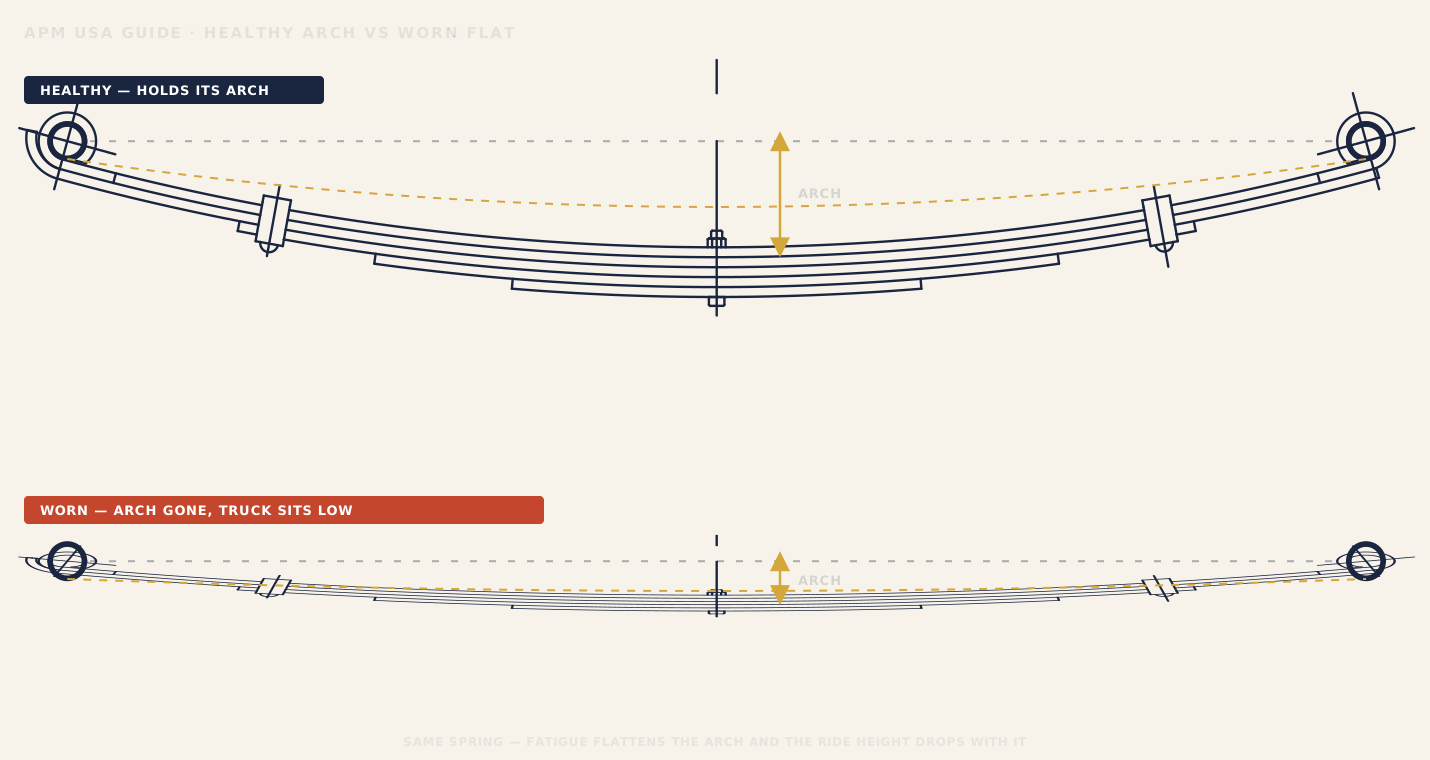
Every load cycle flexes the steel, and over years the spring loses arch and capacity. The truck sits lower, leans toward the harder-working side, and rides the bump stops with weight in the bed. Age plus load does this to original springs on any high-mileage truck. It is not a defect. It is the part reaching the end of its service life.
Two fixes get suggested in every forum thread: add a leaf, or air bags. Both have their place, and neither restores a worn pack. An add-a-leaf props up fatigued steel. Air bags carry load but mask the sag rather than fix it. When the pack is done, the fix is a new pack.
The fix
Replace the pair, match the load
Two decisions: both sides at once, and the right capacity for how the truck actually works.
Replace both sides of the axle together. Springs are sold individually, so that means ordering two. Pairing new steel with tired steel keeps the truck uneven and works the new spring harder than it should.
Then match capacity to your real load. Hauling the same weight every day is a different spec than an empty daily driver that tows a few weekends a year. Our capacity guide walks through leaf counts and ratings. If you are not sure, tell us the truck and what it carries, and we will spec it.