Leaf spring guides
Leaf count, capacity, and ride: how to read a spring
Forum threads argue about 4/1 versus 7/1 packs every week. The engineering behind it is simpler than the arguments. Here is how to read the numbers and match a spring to your load.
The basics
What leaf count tells you
A spring pack is a stack of steel leaves that share the load. The stack decides the rating.
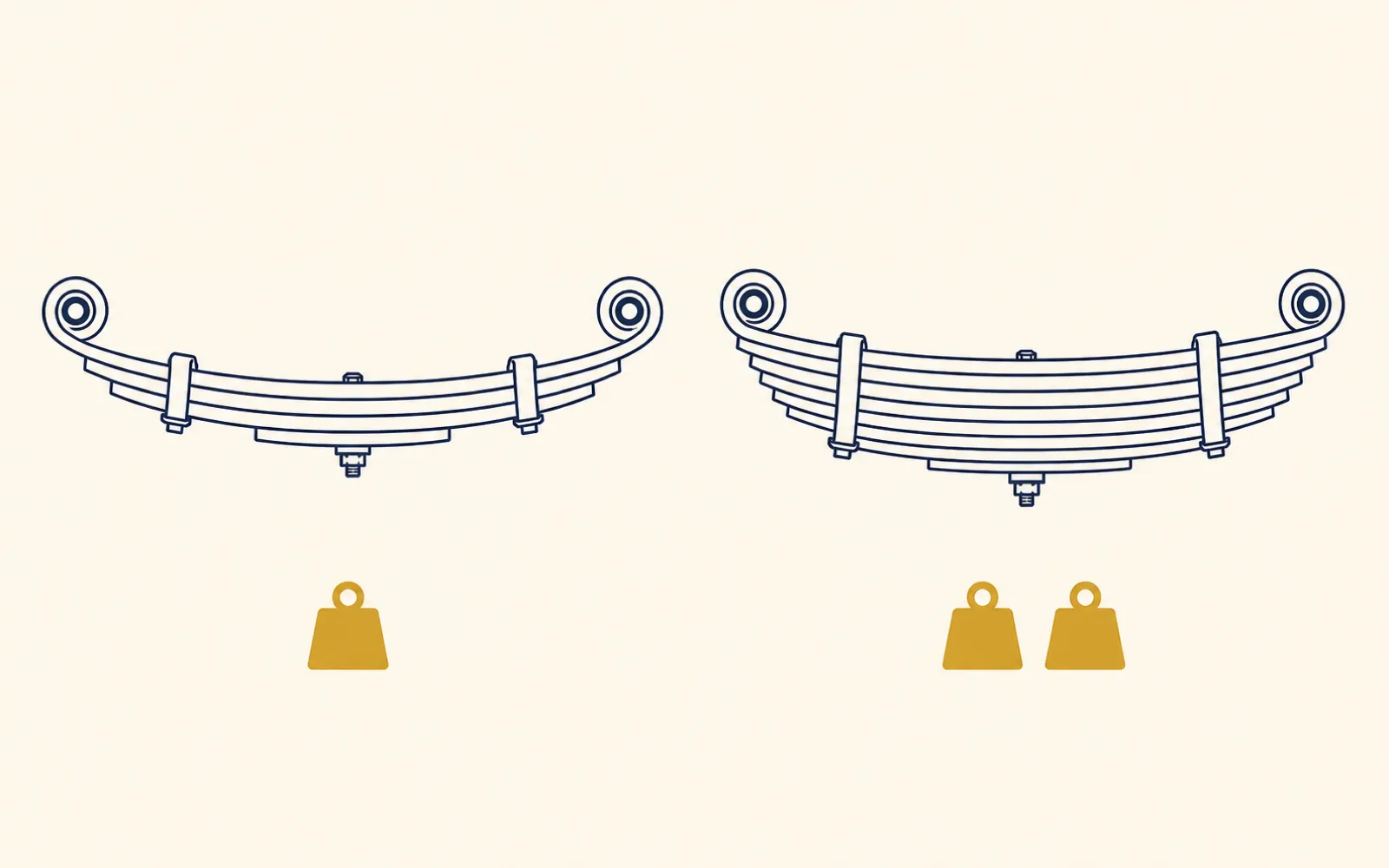
More leaves, or thicker material, raise the capacity of the pack. A common pickup example: a four-leaf rear pack rated around 2,600 lb against a seven-leaf pack rated around 3,300 lb on the same truck. Same mounting points, different working range.
The trade-off is ride. A pack built to carry weight is stiff without it. Owners who upgrade to a heavy-duty pack and drive empty most days feel every seam in the road. That is not a defect either. It is what carrying capacity feels like with nothing in the bed.
You will see pack descriptions written like 4/1 or 7/1. The first number is the main leaf count, the second is a helper leaf that engages under load.
Spring stages
Single-stage and two-stage packs
Two-stage packs exist to solve the empty-versus-loaded problem.
A single-stage pack works as one set of leaves across its whole travel. Simple, predictable, and right for trucks that carry similar weight most of the time.
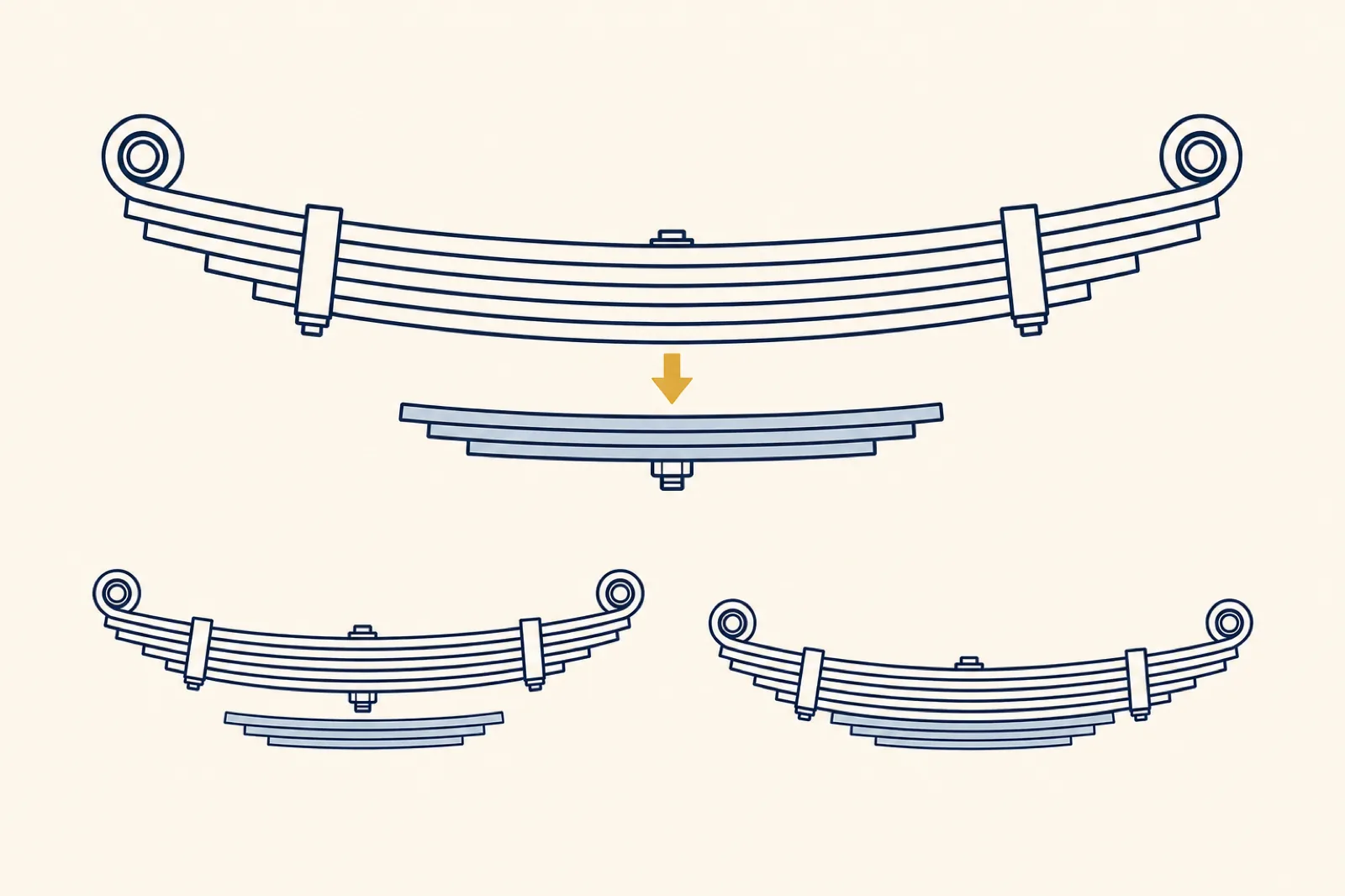
A two-stage pack adds a second set of leaves that sit idle until load compresses the first stage onto them. Empty, the truck rides on the softer first stage. Loaded, the second stage picks up the weight. Our catalog lists the stage type on every part page, next to leaf count and material size.
Choosing
Spec the spring for the load you actually carry
One question does most of the work: what is in the bed on a normal day?
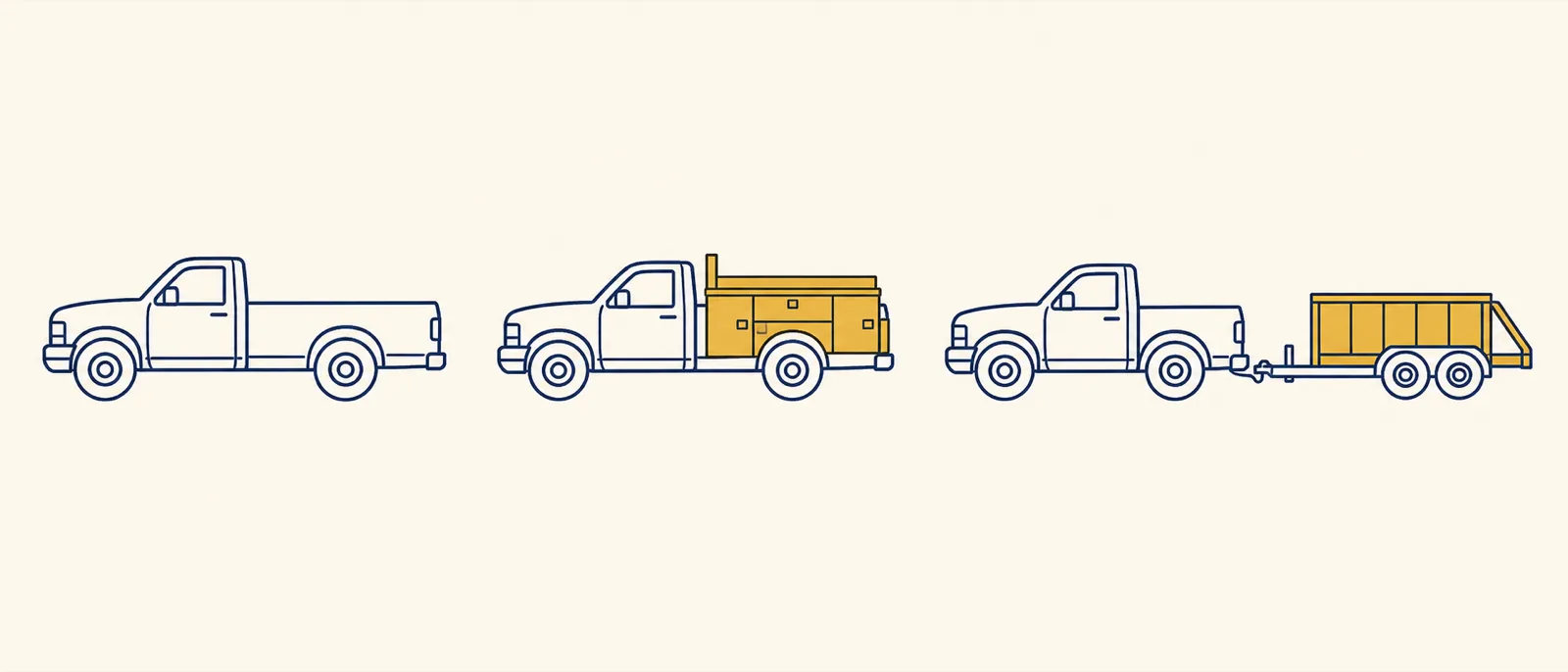
- Restoring stock behavior: the truck sagged with age and you want factory ride height and capacity back. Replace like for like. Same leaf count, same rating.
- Constant heavy load: a service body, a camper that never comes off, tools that live in the bed. Spec the pack for that constant weight. This is where higher leaf counts earn their keep.
- Occasional towing or hauling: mostly empty, sometimes working. Stay close to stock capacity and consider a two-stage pack rather than jumping to a stiff heavy-duty single stage.
Every part page in our catalog lists leaf count, stage, material size, and measurements from our engineering records. If your situation does not fit a category, tell us the truck and the load. Specifying springs is what we do all day.